Home / AI SEO
AI SEO: get recommended by ChatGPT, Gemini and Perplexity
A growing share of buyers ask an AI assistant what to buy or who to hire. We help those assistants find your brand, understand it and name it, and we track how often they do.
- Prompt tracking across major assistants
- Content and brand-footprint work
- AI referral reporting in GA4

How AI answers pick brands
When someone asks an assistant “what’s a good linen blazer for work that doesn’t crease?” or “who’s a good employment lawyer in Leeds?”, the answer usually comes from two places: what the model learned in training, and what it finds when it searches the web in the moment. For buying questions, that live search matters most.
From the sources it finds, the assistant builds a short list. Brands tend to make that list when:
- Several independent sources agree about them. Reviews, editorial articles, forums and comparison pages all saying similar things.
- Their own site states facts clearly. Who the product is for, what it costs, how it compares, what’s included.
- Their product data is complete and consistent. The same price, availability and details in the feed, on the page and in structured data.
- They rank in normal search for the questions the assistant looks up.
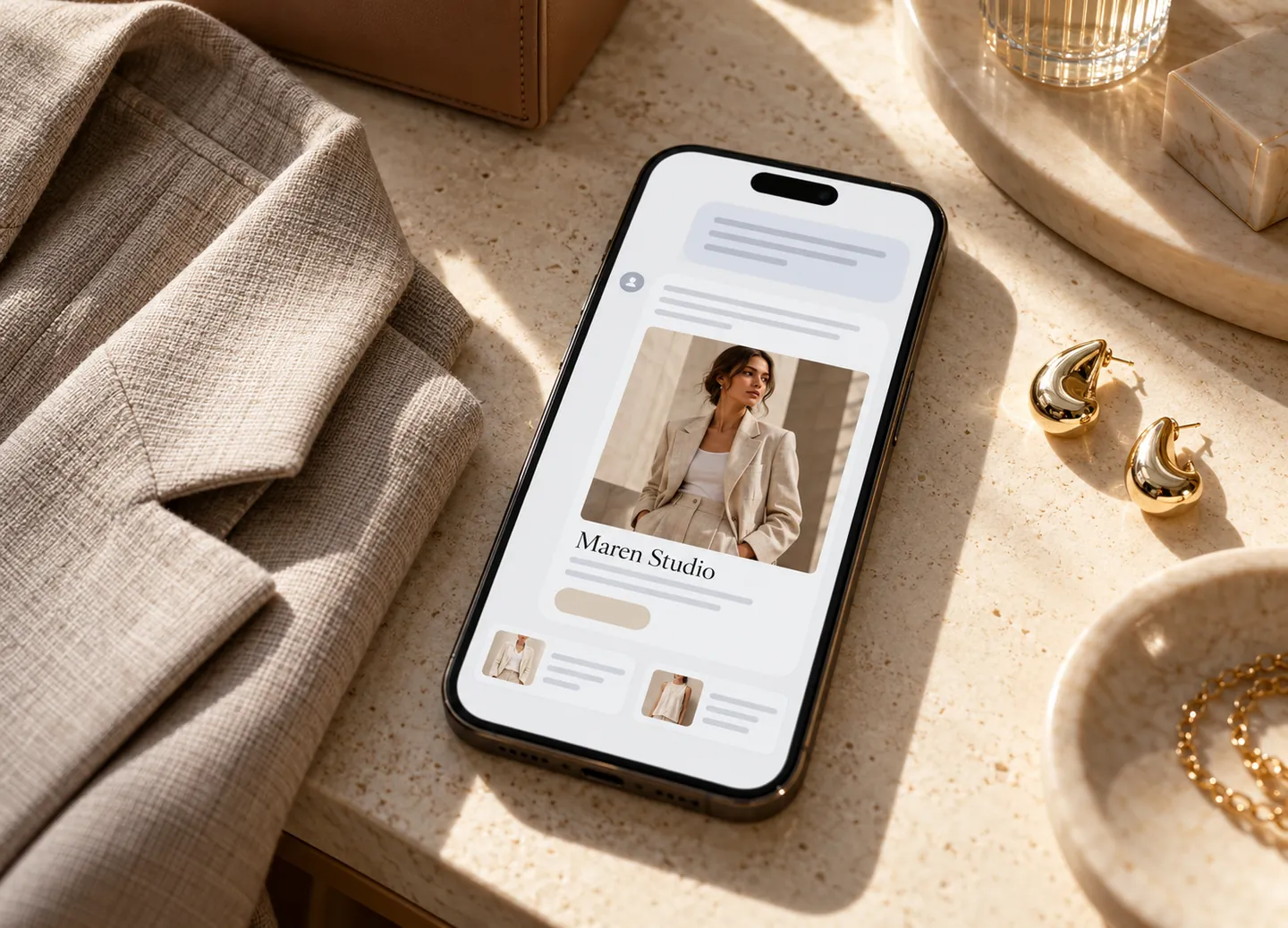
Start with what AI already says about you
Before changing anything, we measure. We build a set of 100 to 300 prompts that real customers might ask, across three types:
| Prompt type | Example | What it shows |
|---|---|---|
| Category | “best linen blazer for summer office wear” | Whether you’re on the shortlist at all |
| Comparison | “Maren Studio vs Atelier Row linen blazer” | How you’re described next to rivals |
| Problem | “what to wear to a summer wedding that isn’t too formal” | Whether you appear before people know what to buy |
We run those prompts across the major assistants and record whether you’re mentioned, where you appear in the answer, how you’re described and which sources were cited. That gives us a share-of-answer baseline and, more usefully, a list of the sources the assistants trust in your category.
Make your site easy to quote
Assistants prefer pages that answer a question directly and back it up with specifics. We rework key pages so they:
- Open with a plain answer, then give the detail.
- Use specific facts: materials, dimensions, prices, timings, credentials.
- Include honest comparison tables, including where a competitor might suit someone better.
- Show who wrote or reviewed the content and why they’re qualified.
- Carry accurate structured data for products, organisation, reviews and FAQs.
We also check that your site isn’t accidentally blocking the crawlers assistants use for search, and that key information isn’t hidden behind scripts, tabs or images that crawlers can’t read.
Build the brand footprint off your site
Your own site is only part of the picture. Assistants weigh what others say about you, so we work on the sources they cite most in your category:
Reviews
A steady flow of genuine reviews on the platforms that matter for your category, not just your own site.
Editorial coverage
Getting into the roundups, “best of” lists and expert articles that assistants keep citing.
Communities
Genuine participation where your customers ask questions, such as Reddit and niche forums. Never fake accounts.
Consistent facts
The same name, description, founding story and key details everywhere your brand appears.
Product data for AI shopping
AI shopping features in ChatGPT, Google and others increasingly pull from structured product data rather than reading your pages. For stores, that means your Merchant Center feed, your Shopify catalog and your product schema now affect AI visibility directly.
This overlaps heavily with our agentic commerce work, where we get your catalog ready for AI agents that can shop on a customer’s behalf.
Measuring AI visibility
We report on AI visibility monthly, using measures you can check yourself:
- Share of answer: how often you’re mentioned across the tracked prompts, and how that compares with competitors.
- Citation share: how often your own pages are linked as a source.
- AI referral traffic: visits and sales from assistants, using a custom channel group in GA4 so they don’t vanish into “referral”.
- Branded search lift: people often hear about you from an assistant and then search your name.
- What customers tell you: an “AI assistant” option on your post-purchase or intake survey.
What we won’t do
There’s a lot of nonsense being sold under the AI SEO label. So, for the record, we don’t hide instructions for AI systems in your pages, we don’t create fake reviews or forum accounts, and we don’t mass-produce AI-written pages. These tricks either don’t work or work briefly before they damage your brand.
Questions about AI SEO
Which AI assistants do you track?
ChatGPT, Google’s AI Overviews and AI Mode, Gemini, Perplexity and Microsoft Copilot as standard. We add others if your customers use them.
Can you guarantee we’ll be recommended?
No, and be wary of anyone who does. AI answers vary from one person and one moment to the next. What we can do is raise how often you appear, and show you the trend honestly.
Should we block AI crawlers?
Usually not if you want to be recommended. Blocking the crawlers that assistants use for search can keep you out of their answers. We review your robots.txt and explain the trade-offs for each crawler.
Does llms.txt help?
It’s cheap to add and does no harm, but there’s little public evidence that major assistants rely on it today. We treat it as a nice extra, not a strategy.
Do we still need regular SEO?
Yes. Most assistants look things up through search indexes before they answer, so strong SEO is the foundation that AI visibility is built on.
Find out what AI assistants say about you
We’ll run a starter set of prompts for your category and show you where you appear, where you don’t, and which sources the assistants trust.
Works well alongside
Get a free audit
Tell us a little about your business. A strategist will look at your site and accounts, then come back within one business day with a time to talk.
What happens next
- We look over your site and public ad activity before we speak.
- On a 30-minute call we walk through what we found and where money is leaking.
- You get a written 90-day plan. It’s yours whether or not you hire us.
Prefer email? Write to theadstroke@gmail.com